What Are the Top Wire Shelving Types in 2026?

Time:2026-11-11 Author:Ethan
0%

Storage choices can look simple until a shelf must hold heavy cartons, damp supplies, or frequently handled tools. Wire Shelving remains popular because its open design supports airflow, visibility, and quick cleaning. But “wire shelving” covers several distinct options, and the wrong finish or capacity can create practical problems.

The U.S. Census Bureau reported that e-commerce accounted for 16.1% of total U.S. retail sales in 2024. That figure does not prove shelving demand, but it illustrates the scale of retail operations where accessible storage matters. MHI’s 2024 Annual Industry Report also examines how supply chains are adapting through investments in technology and operational flexibility. These reports offer useful context, not a direct ranking of shelf products.

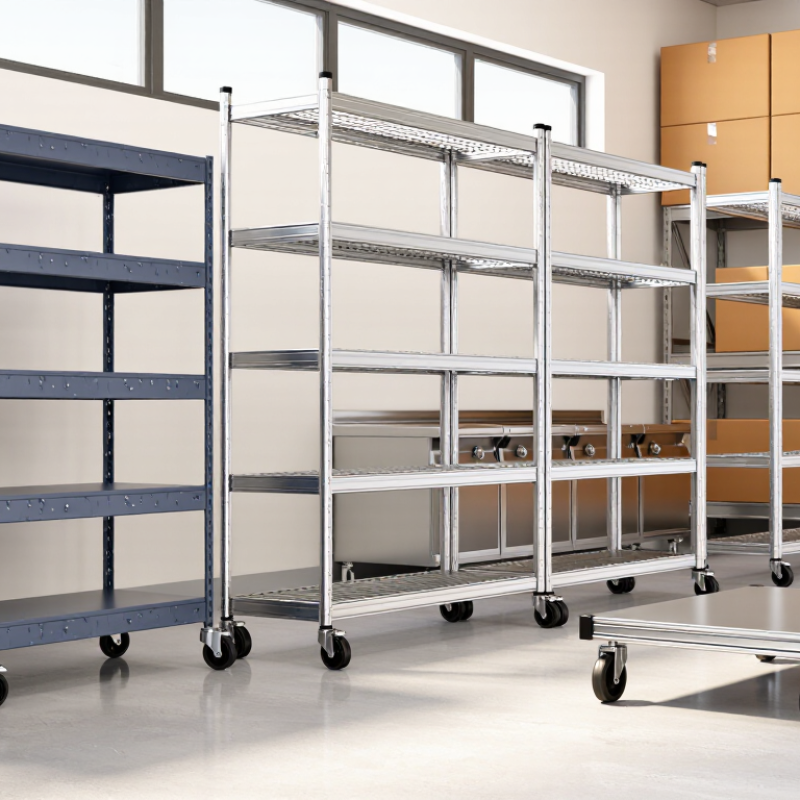
So, which types deserve attention in 2026? Chrome-plated units suit many dry indoor spaces; epoxy-coated shelves offer added protection in humid areas; and stainless-steel options fit settings with demanding cleaning routines. Mobile shelving can reclaim floor space, while heavy-duty designs support denser loads. Small differences matter. Shelf spacing, wheel locks, finish quality, and stated load limits all affect daily use. Manufacturer capacity claims should be checked for the complete unit, not assumed from one shelf. Even then, specifications do not replace an assessment of the actual environment. This guide compares the leading Wire Shelving types, their strengths, trade-offs, and suitable uses. Some choices are less obvious than they seem.
What Are the Top Wire Shelving Types in 2026?

Wire Shelving by Structure: Open-Wire, Solid-Deck, and Dunnage Designs

What Are the Top Wire Shelving Types in 2026?

Wire Shelving by Structure: Open-Wire, Solid-Deck, and Dunnage Designs

Open-wire shelving uses a grid of metal wires to support stored items. Air and light pass through, which helps staff see stock and makes dust less likely to collect on flat surfaces. It suits dry goods, bins, and spaces where airflow matters. Small items can wobble or slip through the gaps, though. Add liners when needed, and check that they do not block airflow or interfere with cleaning.

Solid-deck shelving adds a continuous surface over the wire frame. Boxes sit flat, and small parts stay put. This can make picking easier in busy stockrooms, but a solid deck may hold spills or dust unless it is cleaned regularly. Keep it dry. Confirm the deck and frame share the required load rating; capacity can change with shelf spacing and how weight is distributed. A shelf that looks sturdy is not a reliable rating.

Dunnage shelving keeps goods off the floor, often using low frames or supports designed for bulky loads. It can suit heavy containers, food-service supplies, or items handled with carts and forklifts. Measure the load and access route before choosing a height. Not always the right fit. Dunnage designs may take more floor space and offer less small-item organization than tiered shelves. The trade-off deserves a real look at daily handling, not just the listed capacity.

Finish-Based Types: Chrome, Epoxy, and NSF/ANSI 2 Food-Equipment Criteria

Wire shelving finishes suit different rooms. Chrome-plated steel works well in dry storerooms, where cartons slide across bright, smooth wires. It is less forgiving around standing water: a scratched joint can become a rust point. Epoxy-coated shelving adds a plastic layer that handles damp conditions better, such as near wash areas. But a deep chip exposes the steel beneath. Small detail: inspect corners.

The National Restaurant Association’s 2024 State of the Restaurant Industry projected U.S. restaurant sales of $1.1 trillion. That figure does not measure shelving demand, but it reflects the scale of food-service operations where cleanable storage matters. In practice, match the finish to the cleaning routine, not just the room’s appearance. Frequent chemical cleaning can wear coatings, so check the product’s care instructions and look closely at welds and joints.

NSF/ANSI 2 is a food-equipment standard, not a finish category. It addresses materials, design, construction, and performance related to sanitation; a chrome or epoxy surface alone does not establish compliance. For food-preparation areas, verify that the specific shelving model is certified or otherwise documented as meeting the applicable criteria. Keep food off shelves that are damaged or difficult to clean. This is easy to overlook: a tidy-looking rack may still have grime trapped at a sleeve or post connection.

What Are the Top Wire Shelving Types in 2026? — Finish-Based Types: Chrome, Epoxy, and NSF/ANSI 2 Food-Equipment Criteria

Comparison Point Chrome-Plated Wire Shelving Epoxy-Coated Wire Shelving NSF/ANSI 2 Food-Equipment Criteria
What it is Steel wire with a decorative, metallic chromium-plated finish. The underlying shelf material and any protective layers vary by product. Steel wire covered with a protective epoxy-resin coating. Coating formulation, thickness, and application vary by product. A food-equipment standard addressing factors such as food protection, materials, construction, and cleanability. It is a standard—not a shelf finish.
Typical environment Generally suited to clean, dry indoor storage, such as stockrooms and dry pantries. Often selected for humid or damp indoor storage when the product is specified for that environment. Relevant when shelving is intended to be evaluated or certified for applicable food-equipment use. Check the specific product and its intended application.
Moisture and corrosion May corrode if the plating is damaged or the shelf is exposed to persistent moisture, chemicals, or harsh cleaning conditions. Do not assume it is suitable for wet or washdown areas. The coating can help shield the steel from moisture, but chips, cuts, or worn areas can expose the substrate. Suitability depends on the product and exposure conditions. Compliance does not mean a particular finish is corrosion-proof. Material selection and construction must suit the equipment’s intended use and cleaning conditions.
Cleaning and maintenance Clean with methods and products compatible with the finish; dry thoroughly after cleaning. Inspect for worn or damaged plating. Use cleaning methods approved for the coating. Inspect regularly for cuts, peeling, or exposed metal, and replace damaged components when necessary. Design should support effective cleaning and reduce areas where food soil can collect. Follow the manufacturer’s cleaning instructions and applicable food-safety procedures.
Common strengths Bright appearance, open-wire airflow, and practical storage for dry locations. Protective coated surface and a range of colors; often considered for more humid settings than standard chrome shelving. Provides a recognized framework for evaluating food-equipment design and construction when the applicable product is certified or otherwise shown to conform.
Key limitations Not a default choice for wet, corrosive, or repeated washdown conditions. A shiny finish alone does not establish food-equipment compliance. Coating damage can compromise protection. Not every epoxy-coated shelf is suitable for food areas or certified to a food-equipment standard. NSF/ANSI 2 does not prescribe one universal shelf finish, and a finish name alone does not prove compliance. Verify the exact model, scope, and certification status.
Best selection check Confirm the intended dry-use environment, load rating, finish details, and cleaning guidance. Confirm the coating’s intended environment, chemical compatibility, load rating, and repair or replacement guidance. Look for documentation covering the exact shelving model and intended use; confirm that the certification applies to the relevant standard and product category.

Important: NSF/ANSI 2 is a food-equipment standard, not a finish category. Requirements and certification scope depend on the equipment and its intended use; verify current documentation for the specific product before use in a food-handling area.

Stainless-Steel Shelving: Grade 304’s Nominal 18/8 Chromium-Nickel Composition

What Are the Top Wire Shelving Types in 2026?
Stainless-Steel Shelving: Grade 304’s Nominal 18/8 Chromium-Nickel Composition

Stainless-steel wire shelving suits damp rooms, busy kitchens, and areas that need frequent cleaning. Grade 304 is commonly described as 18/8: about 18% chromium and 8% nickel. These elements help the steel resist corrosion and maintain a cleanable surface. The figures are nominal, not a guarantee that every product has exactly the same composition. Check the material specification when precise grade information matters.

Tips: Inspect welds, shelf edges, and posts for smooth finishes. Wipe away spills rather than letting them sit. Grade 304 is corrosion-resistant, not rustproof. Salt, harsh cleaners, and persistent moisture can still cause staining or pitting.

For everyday storage, 304 wire shelves can handle cookware, containers, and regularly used supplies. Their open design allows airflow and makes dust or spills easier to spot. But capacity depends on the full unit, including its frame, shelf spacing, and installation. A thick-looking shelf is not proof of a high load rating. I would check the stated capacity and distribute heavy items across the shelf. It is easy to overlook that detail.

Stainless-Steel Shelving: Grade 304 Chromium-Nickel Composition

Grade 304 is commonly described as 18/8 stainless steel. Its specified composition ranges are 18.0–20.0% chromium and 8.0–10.5% nickel by weight.

Bars show the specified minimum-to-maximum composition ranges. The 18/8 label is a rounded shorthand, not an exact analysis.

Mobile vs. Stationary Shelving: Compare Rated Shelf Loads and Caster Capacities

What Are the Top Wire Shelving Types in 2026?
Mobile vs. Stationary Shelving: Compare Rated Shelf Loads and Caster Capacities

Stationary wire shelving suits stock that stays put. Its rated shelf load usually assumes an evenly distributed weight, not a heavy box resting at one corner. Mobile shelving adds another limit: caster capacity. A shelf may support a substantial load while its wheels or frame cannot safely carry the fully loaded unit in motion. That distinction matters. Check whether ratings apply per shelf, per caster, or to the complete assembly. Ratings vary by design.

Tips: Add the loads on every shelf, then check the unit’s total rating and caster specifications. Leave a safety margin. Uneven floors, door thresholds, and sudden turns can increase stress on wheels. Brakes help keep a cart still; they do not raise its rated capacity.

For a mobile unit, do not simply multiply one caster’s rating by four. Weight can shift, and a rough floor may leave fewer wheels carrying the load at a given moment. Follow the manufacturer’s stated system capacity and loading instructions. Keep dense items low, distribute them across the shelves, and test movement with a modest load before adding more. I’ve seen carts feel stable when empty, then wobble once heavy containers sit near the top. It is easy to overlook that. If the specifications are unclear, ask the supplier for the rated mobile capacity, not just the shelf rating.

2026 Selection Checks: Load Ratings and OSHA 29 CFR 1910.176(b) Stability Rules

For 2026, compare stationary, mobile, and wall-mounted wire shelving by the job each must do. Stationary units suit fixed pick locations; mobile units need extra attention to movement and braking. Check the load label, not just the product title. It should state both capacity per shelf and total unit capacity, and clarify whether the load must be evenly distributed. For example, four shelves rated at 200 pounds each do not automatically make a unit safe for 800 pounds if its frame has a lower overall limit. Small detail. But it matters.

OSHA 29 CFR 1910.176(b) requires stored materials to remain stable and secure against sliding or collapse; it sets no universal shelf load rating. That means the real check is the loaded installation: level feet, locked casters, secure connections, and heavier items kept low. ANSI/RMI MH16.1-2023 is an engineering standard for steel storage racks, not a blanket rating for every wire shelf. Use it as a reminder to verify the applicable design basis, not as a substitute for the shelving maker’s documentation. A practical record should include the unit model, stated capacities, floor condition, and inspection date. I would recheck after moving a unit; that step is easy to overlook.

FAQS

When is open-wire shelving a practical choice?

It suits dry goods, bins, and areas needing airflow. The open grid helps staff see stock and limits dust on flat surfaces. Small items may slip through. Use liners carefully.

What does solid-deck shelving do better?

Its continuous surface keeps small parts steady and boxes flat. It can simplify picking in a busy stockroom. Spills and dust may collect, so clean and dry it regularly. Looks can mislead.

What should I consider before choosing dunnage shelving?

Dunnage designs lift bulky goods off the floor and can suit heavy containers. Measure the load and access route before selecting a height. They may take more floor space. Not always the right fit.

How should shelving finish match the room?

Chrome-plated steel suits dry storerooms, while epoxy coating can better handle damp areas. Scratches or deep chips may expose steel. Inspect corners and joints.

Does a particular finish prove food-equipment compliance?

No. NSF/ANSI 2 concerns sanitation-related materials, design, construction, and performance. Verify documentation for the specific shelving model. A clean appearance alone is not proof.

How do load ratings differ between stationary and mobile shelving?

Stationary shelf ratings generally assume evenly distributed weight. Mobile units also depend on caster and total assembly capacity. Check the stated ratings. Leave a safety margin.

Why shouldn’t I multiply one caster’s rating by four?

Weight can shift, and uneven floors may leave fewer wheels carrying the load. Follow the unit’s stated mobile capacity. Brakes hold a cart still; they do not increase capacity.

How can I reduce wobbling when moving a loaded unit?

Keep dense items low and spread weight across the shelves. Test movement with a modest load before adding more. A cart may feel stable empty, then wobble. I would double-check.

Conclusion

Wire Shelving in 2026 comes in several practical designs. Open-wire shelves promote airflow and visibility, while solid-deck models provide a more continuous surface for smaller items. Dunnage designs sit low and are suited to supporting bulky goods. Finish affects where shelving works best: chrome is commonly used in dry indoor settings, epoxy coatings can suit environments where added corrosion resistance is useful, and food-service applications may call for equipment that meets relevant NSF/ANSI 2 criteria.

Stainless-steel shelving is another option; Grade 304 is typically described by its nominal 18/8 chromium-nickel composition. When choosing mobile or stationary units, compare the rated capacity of each shelf and, for mobile systems, the casters as well. Check that the assembled shelving is stable, properly loaded, and appropriate for its intended location. Following load limits and applicable workplace stability guidance, including OSHA 29 CFR 1910.176(b), can help reduce tipping and falling-object risks.

Ethan

Ethan

Ethan is a seasoned marketing professional with a deep expertise in our company's innovative product line. With a passion for sharing knowledge and insights, he takes the lead in regularly updating our corporate blog, where he explores industry trends, product features, and effective marketing......