China Top 10 Narrow Aisle Storage Manufacturers?

Time:2026-09-30 Author:Sophia
0%

Narrow Aisle Storage is becoming a practical answer to China’s rising warehouse-density requirements. It uses tighter aisle widths, taller rack positions, and specialized forklifts to increase pallet capacity without expanding the building footprint. In a 2024 report, MHI found that 55% of supply-chain leaders had increased technology and innovation investment during 2023. The same report stated that 88% expected further investment within three years. These figures show why storage design now influences operational competitiveness.

Martin Christopher, a leading logistics and supply-chain scholar, wrote, “Supply chains compete, not companies.” His statement fits Narrow Aisle Storage closely. A rack system may look simple, yet aisle width affects forklift turning, operator visibility, travel time, and safety performance. The wrong specification can create congestion beside a loading dock at 7 a.m. It can also leave expensive vertical space unused.

This guide examines China’s top 10 Narrow Aisle Storage manufacturers through practical criteria. These include rack engineering, load capacity, steel quality, forklift compatibility, installation experience, customization, testing documentation, and after-sales support. Market credibility also matters. A supplier should provide completed project references, clear tolerances, and traceable material information. Certification alone is not enough.

No ranking is flawless. Buyer priorities differ. A cold-storage operator may value corrosion resistance, while an e-commerce warehouse may prioritize rapid replenishment. Some manufacturers present impressive catalogs but limited evidence from demanding projects. Therefore, this review combines available company information, industry reports, technical details, and visible customer experience. The goal is not to praise every supplier, but to identify manufacturers worth deeper verification.
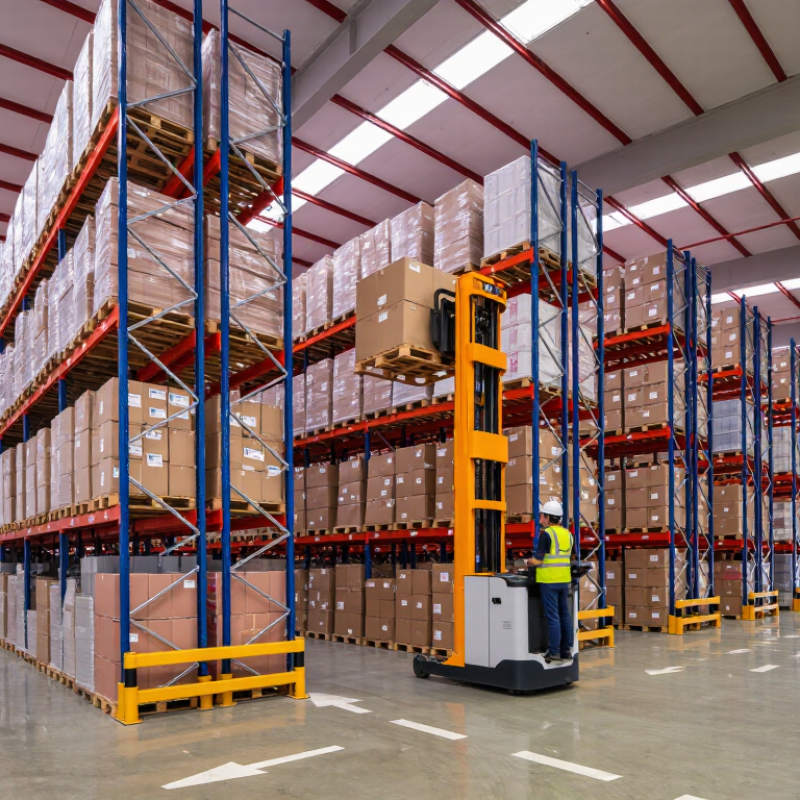
China Top 10 Narrow Aisle Storage Manufacturers?

What Narrow Aisle Storage Systems Are and How They Work

Narrow aisle storage uses tall pallet racks with tighter travel lanes than conventional warehouse layouts. Specialized reach trucks or turret trucks move through these lanes, lifting pallets to higher beam levels. Some systems use floor rails or wire guidance to keep trucks aligned. The rack structure stays fixed; the truck does the precise work. That distinction matters.

The goal is to store more pallets within the same building footprint while keeping goods accessible. Operators can retrieve individual pallet positions, but aisle width, turning space, load size, and truck specifications must work together. A layout should be checked against real inventory and daily traffic, not just a floor plan. Small measurement errors can become awkward operating habits.

Tips: Measure the widest load, not only the pallet. Check floor flatness and clearances before installation. Train drivers on the chosen guidance system, and inspect racks for impact damage. Keep emergency access in the design. It is easy to overlook. Narrow aisles may improve capacity, but they can also slow work if replenishment and picking routes are poorly planned.

Key Criteria for Evaluating Chinese Storage Manufacturers

When evaluating Chinese narrow aisle storage manufacturers, start with engineering evidence, not catalog images. Ask for drawings that match your pallet dimensions, forklift turning radius, clear height, and floor conditions. A rack that fits on paper may still obstruct sprinkler lines or leave too little clearance during daily handling. Measure the actual aisle and load unit before comparing quotations.

Check how each supplier verifies load capacity and material quality. Request rated-load calculations, steel specifications, weld inspection procedures, and coating details. Ask whether the quoted capacity applies to each beam level or the full frame. These distinctions matter. Review sample inspection records and, where practical, arrange a factory audit or independent inspection. Clear answers are more useful than broad claims about quality.

After-sales support deserves the same scrutiny as manufacturing. Confirm spare-part availability, installation guidance, warranty terms, and response times in writing. Request references for projects with similar rack heights and operating conditions. Then speak with a site manager, not only a sales contact. No checklist catches every site condition. I would still question a quotation that looks unusually complete but omits floor-load assumptions; that detail is easy to miss, and costly to correct later.

China’s Top 10 Narrow Aisle Storage Manufacturers

China’s Top 10 Narrow Aisle Storage Manufacturers

China’s top 10 narrow aisle storage manufacturers are often judged by engineering depth, production control, and project experience. Reliable manufacturers design systems for forklifts, pallet dimensions, floor conditions, and required storage heights. Their teams usually provide rack layouts, load calculations, safety documents, and installation guidance. Factory inspections can reveal welding quality, coating consistency, and material traceability. These details matter in a busy warehouse.

A practical evaluation should compare aisle widths, beam capacity, upright thickness, and adjustment options. Ask for testing records and drawings suited to your actual building. Some suppliers offer strong prices but limited after-sales support. That weakness may appear only after installation. A ranking can also mislead, because a large manufacturer may not fit a small or unusual project. I would review recent installations and speak with operators, not only sales teams.

Tips: Measure the narrowest aisle before requesting quotations. Confirm forklift turning data with the equipment supplier. Request a sample coating report and documented load test. Check whether spare components are available locally. Leave clearance for sprinklers, lighting, and uneven floors. A small design error can reduce usable capacity quickly. Recheck every figure.

Product Features and Industry Applications by Manufacturer

China’s top narrow aisle storage manufacturers typically serve warehouses where floor space is limited but inventory turnover remains high. Their systems often include adjustable pallet beams, guided reach trucks, reinforced uprights, and digital location labels. Several manufacturers also offer galvanized components for humid environments. Powder-coated steel remains common for indoor facilities.

Product design varies by application. Heavy-duty systems support automotive parts, machinery, and packaged building materials. Medium-load configurations fit retail distribution centers and spare-parts warehouses. Some manufacturers provide mobile aisle solutions, which reduce unused floor space and increase pallet density. Others focus on very narrow aisle layouts with rail guidance or wire guidance. These features improve positioning accuracy, but they may increase installation and maintenance costs.

Food and beverage warehouses usually need corrosion resistance, clear hygiene zones, and easy cleaning access. E-commerce operations value rapid retrieval, barcode compatibility, and flexible beam adjustment. Cold-storage facilities require materials and finishes that tolerate low temperatures. In field inspections, aisle width is often underestimated. Turning clearance, rack protection, floor flatness, and emergency access can change the real capacity. A technically impressive design may still perform poorly if operators receive limited training. That point deserves more attention. Reliable manufacturers should provide load calculations, installation drawings, inspection guidance, and after-sales support. Independent verification is still wise, especially when storage loads change frequently.

How to Choose the Right Narrow Aisle Storage Supplier in China

How to Choose the Right Narrow Aisle Storage Supplier in China

Choosing among China’s top narrow aisle storage manufacturers requires more than comparing prices. Start with your warehouse data: aisle width, pallet dimensions, load weight, ceiling height, and equipment turning radius. A capable supplier should produce layout drawings and explain how each measurement affects capacity. Ask for steel grades, load testing methods, surface treatment details, and installation tolerances. Clear technical answers show real expertise.

Check the supplier’s project experience in warehouses similar to yours. Request references, inspection records, warranty terms, spare-part support, and response times. Factory audits can reveal welding quality, coating consistency, and production discipline. A low quotation may look attractive, but weak after-sales service can create expensive delays. The cheapest option is not always efficient. Sometimes, the specification itself needs rethinking.

Tips: Compare complete project costs, not only rack prices. Confirm whether installation, delivery, testing, and training are included. Ask for a small sample or detailed drawing before placing a large order. Leave enough clearance for forklifts and maintenance access. Human error happens. Design for it. Review fire safety, floor strength, and local compliance with qualified professionals. A reliable supplier should welcome questions, admit limitations, and revise the plan when warehouse conditions change.

China Top 10 Narrow Aisle Storage Manufacturers? – How to Choose the Right Narrow Aisle Storage Supplier in China
Rank Anonymized Supplier Profile Primary Narrow-Aisle Solutions Typical Load Range Typical Clear Aisle Range Maximum Configuration Height Customization Capability Compliance Documentation Typical Production Lead Time Warranty Benchmark Best-Fit Application Evaluation Score
1 Supplier Profile 01 Very-narrow-aisle pallet racking, selective racking, guide-rail systems 500–4,000 kg per pallet position 1,600–2,000 mm Up to approximately 12 m, subject to engineering review High Load calculations, layout drawings, installation manuals, material certificates upon request 25–40 days after drawing approval 12 months for manufacturing defects High-density distribution centres with repetitive pallet storage 92/100
2 Supplier Profile 02 Reach-truck racking, double-deep racking, pallet flow integration 500–3,500 kg per pallet position 1,800–2,300 mm Up to approximately 11 m, subject to site conditions High Structural drawings, welding records, quality inspection reports 30–45 days after technical confirmation 12 months for product quality Cold-chain, food and beverage, and general warehousing 90/100
3 Supplier Profile 03 Adjustable pallet racking, narrow-aisle workstations, mezzanine support 300–3,000 kg per pallet position 1,900–2,400 mm Up to approximately 10 m High Product specifications, installation guidance, third-party testing when contracted 25–45 days 12 months Retail, spare parts, and medium-duty industrial storage 88/100
4 Supplier Profile 04 Mobile pallet racking, compact storage, selective racking 500–4,000 kg per pallet position 1,700–2,200 mm when aisle access is required Up to approximately 9 m High Drive-unit data, structural calculations, safety operating instructions 35–55 days 12 months for mechanical and structural components Warehouses where floor space is more valuable than access speed 87/100
5 Supplier Profile 05 Light-duty narrow-aisle shelving, carton flow, bin storage 100–1,000 kg per bay level 1,200–1,800 mm Up to approximately 6 m High Load labels, assembly instructions, component specifications 20–35 days 12 months E-commerce picking, small parts, and manual order fulfilment 85/100
6 Supplier Profile 06 Drive-in racking, push-back racking, high-density pallet storage 500–2,500 kg per pallet position 3,000–3,500 mm for forklift operation Up to approximately 9 m Medium Load data, operating procedures, inspection checklist 30–50 days 12 months High-volume products with limited SKU variety 83/100
7 Supplier Profile 07 Automated storage support frames, shuttle racking, pallet racking 500–2,000 kg per pallet position 1,500–2,000 mm for shuttle-compatible layouts Up to approximately 15 m, subject to automation design High Interface drawings, load calculations, equipment coordination documents 45–75 days 12 months for racking; system warranty separately specified Automated warehouses requiring high storage density 82/100
8 Supplier Profile 08 Standard selective racking, narrow-aisle pallet systems, accessories 500–3,000 kg per pallet position 2,000–2,600 mm Up to approximately 10 m Medium Standard technical datasheets, installation instructions, inspection records 20–40 days 12 months General-purpose warehouses with varied SKU profiles 80/100
9 Supplier Profile 09 Long-span shelving, cantilever racking, mixed-load storage 200–2,000 kg per level 1,800–2,500 mm Up to approximately 8 m High Component drawings, load labels, assembly and safety documentation 25–45 days 12 months Long goods, industrial components, and mixed manual handling 78/100
10 Supplier Profile 10 Budget selective racking, boltless shelving, warehouse accessories 100–2,000 kg per pallet position 2,200–2,800 mm Up to approximately 8 m Medium Basic product specifications and assembly instructions 20–35 days 12 months, subject to contract terms Cost-sensitive projects and standard warehouse layouts 76/100
Buyer verification note: The supplier profiles are anonymized benchmark categories rather than disclosed company or brand records. Actual capacity, aisle width, height, lead time, warranty, compliance, and engineering suitability must be confirmed through approved drawings, load calculations, factory audits, test reports, references, and a signed commercial contract. Narrow-aisle dimensions depend on the forklift model, pallet size, turning radius, floor flatness, fire-safety requirements, and local building regulations.

FAQS

What is narrow aisle storage?

It uses tall pallet racks and tighter travel lanes than conventional warehouse layouts. More pallets fit inside the same building.

How do trucks operate in narrow aisles?

Reach trucks or turret trucks travel through narrow lanes and lift pallets to higher beam levels. Some systems use rails or wire guidance.

What measurements should be checked before installation?

Measure the widest load, pallet size, truck turning radius, clear height, and aisle width. Do not measure pallets alone.

Can a narrow aisle layout slow warehouse work?

Yes. Poor replenishment routes, limited turning space, or unsuitable trucks may reduce operating speed. Higher capacity is not everything.

How can storage capacity and access be balanced?

Use real inventory and daily traffic data when planning rack positions and travel routes. A clean floor plan can still fail during busy shifts.

What evidence should be requested from a storage manufacturer?

Request matching drawings, rated-load calculations, steel specifications, weld inspection procedures, and coating details. Catalog images are not enough.

How should quoted rack capacity be verified?

Confirm whether capacity applies to each beam level or the entire frame. That difference can change safety decisions.

What site conditions deserve special attention?

Check floor flatness, floor-load assumptions, sprinkler clearances, emergency access, and truck clearance. Small errors become expensive habits.

What after-sales support should be confirmed?

Confirm spare parts, installation guidance, warranty terms, and written response times. Ask for similar project references.

Why are inspections and operator training important?

Train drivers on the guidance system and inspect racks for impact damage. I would still recheck everything.

Conclusion

This article presents a practical overview of Narrow Aisle Storage systems, explaining how they maximize warehouse capacity by reducing aisle width while maintaining efficient access to inventory. It introduces the main system types, operating principles, and equipment requirements, then outlines key criteria for evaluating Chinese storage manufacturers, including engineering capability, product quality, customization, safety standards, installation support, delivery reliability, and after-sales service.

The article also compares the typical features and industry applications of ten leading categories of Chinese manufacturers without focusing on specific brand names. It highlights solutions for warehouses, distribution centers, manufacturing facilities, and cold storage environments, helping readers understand which designs may suit different operational needs. Finally, it provides a clear framework for selecting the right Narrow Aisle Storage supplier based on warehouse layout, load requirements, equipment compatibility, budget, project experience, and long-term service capabilities.

Sophia

Sophia

Sophia is a dedicated marketing professional with an exceptional depth of knowledge about her company's products and services. With a keen understanding of market trends and customer needs, she crafts insightful blog posts that not only inform but also engage readers, enriching the company’s online......