China Top 10 Impact Rack Suppliers for Global Buyers

Time:2026-11-04 Author:Liam
0%

Impact Racks are often judged by a simple test: can they protect pallet-rack frames where forklifts turn, reverse, and sometimes clip a column? For global buyers, the answer depends on more than steel thickness. Anchorage, impact direction, aisle clearance, installation quality, and replacement-part availability all matter. Damage adds up. A guard that blocks access or shifts after a strike may create new problems.

MHI’s 2024 Annual Industry Report found that 55% of surveyed supply-chain professionals planned to increase investment in supply-chain technology and innovation. That trend puts pressure on warehouses to improve throughput while managing risk. Rack protection deserves the same practical scrutiny as other facility investments. ANSI MH16.1, published by the Rack Manufacturers Institute, provides engineering requirements for industrial steel storage racks; buyers should check that protection products work with their rack design and site conditions. MIT supply-chain expert Yossi Sheffi’s work on resilience offers a useful principle: resilience needs to be built into operations, rather than improvised after disruption.

This guide reviews China’s top 10 Impact Racks suppliers for global buyers, with attention to product range, customization, quality controls, and export support. Ask for drawings, material specifications, test evidence, and clear installation guidance. Then verify them. Supplier claims can sound polished; documents and site-fit details matter more. No ranking can replace an on-site assessment, and that is an important limitation. The right choice should match the actual traffic pattern, rack layout, and maintenance plan—not just the catalogue photo.
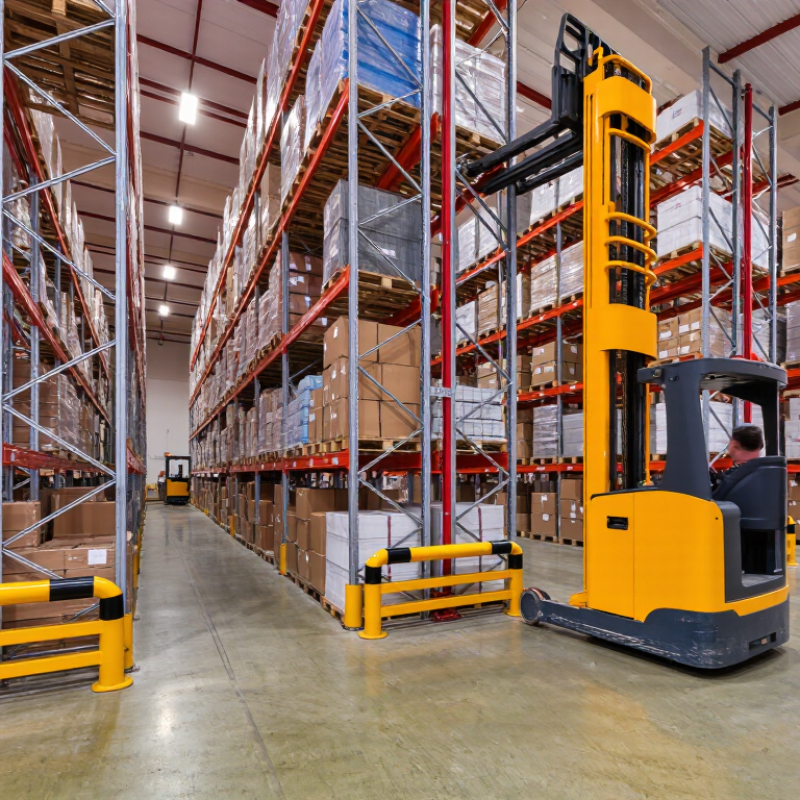
China Top 10 Impact Rack Suppliers for Global Buyers

Impact Rack Fundamentals: Load Types, Collision Risks, and Guarding Options

Impact racks support more than pallet weight. They also face forces from forklifts, uneven floors, and shifting loads. A rack may carry evenly distributed pallets, concentrated loads, or mixed storage with different pallet sizes. Each pattern changes how weight reaches the beams and uprights. A heavy load near one beam end can create stress that a simple total-weight estimate misses.

Collision risk often starts at aisle level. Forklift tines can strike upright columns, especially near busy turns or poorly marked intersections. Even a small dent may weaken a structural member, though the visible damage alone cannot confirm its remaining capacity. Guarding helps absorb or deflect routine impacts. Options include upright protectors, end-of-aisle barriers, and column guards. They must fit the rack layout and leave enough clearance for handling equipment. That detail is easy to overlook.

Before selecting protection, document load weights, pallet dimensions, rack configuration, and typical vehicle paths. Use the rack supplier’s rated capacity information, and ask a qualified professional to assess damage or uncertain designs. Guards do not make a rack immune to impact. They can also shift collision forces into nearby components, so placement matters. In practice, teams sometimes focus on guard installation and forget to check anchors, beam connections, and floor condition. Those checks are less visible, but still important.

Rack Safety Benchmarks: ANSI MH16.1-2021 and EN 15512:2020

For global buyers, ANSI MH16.1-2021 and EN 15512:2020 are not interchangeable labels. ANSI MH16.1 sets design, testing, and use requirements for industrial steel storage racks in the United States. EN 15512 addresses structural design of adjustable pallet racking in Europe. Each framework evaluates rack behavior through defined load assumptions and structural checks. Compare the calculation basis, seismic conditions, steel properties, and local requirements before accepting a supplier’s design. A certificate alone is not enough.

The practical checks are visible on site: beam connectors fully engaged, upright braces intact, anchors fitted, and load signs readable. Small details matter. BLS reported 5,283 fatal work injuries in the United States in 2023; transportation incidents accounted for 1,942. This is not rack-specific data, but it reinforces the need for disciplined warehouse risk controls. Ask suppliers for project-specific calculations, test evidence, and installation tolerances—not just a product brochure. Then inspect the finished bay against the approved drawings. Even a neat drawing can miss a floor condition or an altered aisle. That gap deserves a second look.

Rack Safety Benchmarks: ANSI MH16.1-2021 and EN 15512:2020

Edition years of two widely referenced standards for the structural design of industrial storage racks.

The year shown is the edition year identified in each standard’s designation; it is not a safety score or a supplier-performance rating. The standards have different scopes and should not be treated as directly equivalent.

References: ANSI MH16.1-2021, Specification for the Design, Testing and Utilization of Industrial Steel Storage Racks; EN 15512:2020, Steel static storage systems — Adjustable pallet racking systems — Principles for structural design.

China’s Top 10 Impact Rack Suppliers: Compare 10 Firms Across 6 Buyer Metrics

China’s top impact rack suppliers can look similar in catalog photos, but buyer needs differ. A useful comparison of ten firms should examine six practical metrics: load capacity, rack compatibility, material and weld quality, customization, lead time, and after-sales support. Ask for rated-load data, not just a headline figure. Check whether beam dimensions match your existing system.

For quality, request material specifications and close-up weld photos, then confirm what inspection records are available. Small details matter. A base plate that sits unevenly can complicate installation. Compare customization by checking whether suppliers can adjust height, beam length, or protective features without unclear extra charges. Lead-time estimates should state production and shipping separately, since a short factory schedule does not guarantee a fast delivery.

Support matters after arrival. Check how quickly a supplier answers technical questions and whether replacement parts can be identified from drawings. Price still belongs in the comparison, but it should be weighed against these six metrics rather than judged alone. A simple scorecard can keep ten quotes readable. Still, no score is perfect; sample reviews and site conditions may reveal issues a spreadsheet misses.

China Top 10 Impact Rack Suppliers for Global Buyers

China’s Top 10 Impact Rack Suppliers: Compare 10 Firms Across 6 Buyer Metrics

Supplier identities and supplier-specific specifications are not provided here. To avoid presenting unverified claims as facts, each entry is anonymized and marked for buyer verification.

Anonymous Supplier Rated Load per Level Rack Configuration & Customization Seismic Design Documentation Corrosion Protection Compliance Documentation Lead Time & Warranty Terms
Supplier 01 Request a project-specific load table and engineering drawings. Confirm bay dimensions, beam levels, and available options. Request calculations or drawings applicable to the project site. Confirm coating type, finish specification, and intended environment. Request applicable test reports, certificates, and standards declarations. Obtain a written production schedule and warranty terms.
Supplier 02 Request a project-specific load table and engineering drawings. Confirm bay dimensions, beam levels, and available options. Request calculations or drawings applicable to the project site. Confirm coating type, finish specification, and intended environment. Request applicable test reports, certificates, and standards declarations. Obtain a written production schedule and warranty terms.
Supplier 03 Request a project-specific load table and engineering drawings. Confirm bay dimensions, beam levels, and available options. Request calculations or drawings applicable to the project site. Confirm coating type, finish specification, and intended environment. Request applicable test reports, certificates, and standards declarations. Obtain a written production schedule and warranty terms.
Supplier 04 Request a project-specific load table and engineering drawings. Confirm bay dimensions, beam levels, and available options. Request calculations or drawings applicable to the project site. Confirm coating type, finish specification, and intended environment. Request applicable test reports, certificates, and standards declarations. Obtain a written production schedule and warranty terms.
Supplier 05 Request a project-specific load table and engineering drawings. Confirm bay dimensions, beam levels, and available options. Request calculations or drawings applicable to the project site. Confirm coating type, finish specification, and intended environment. Request applicable test reports, certificates, and standards declarations. Obtain a written production schedule and warranty terms.
Supplier 06 Request a project-specific load table and engineering drawings. Confirm bay dimensions, beam levels, and available options. Request calculations or drawings applicable to the project site. Confirm coating type, finish specification, and intended environment. Request applicable test reports, certificates, and standards declarations. Obtain a written production schedule and warranty terms.
Supplier 07 Request a project-specific load table and engineering drawings. Confirm bay dimensions, beam levels, and available options. Request calculations or drawings applicable to the project site. Confirm coating type, finish specification, and intended environment. Request applicable test reports, certificates, and standards declarations. Obtain a written production schedule and warranty terms.
Supplier 08 Request a project-specific load table and engineering drawings. Confirm bay dimensions, beam levels, and available options. Request calculations or drawings applicable to the project site. Confirm coating type, finish specification, and intended environment. Request applicable test reports, certificates, and standards declarations. Obtain a written production schedule and warranty terms.
Supplier 09 Request a project-specific load table and engineering drawings. Confirm bay dimensions, beam levels, and available options. Request calculations or drawings applicable to the project site. Confirm coating type, finish specification, and intended environment. Request applicable test reports, certificates, and standards declarations. Obtain a written production schedule and warranty terms.
Supplier 10 Request a project-specific load table and engineering drawings. Confirm bay dimensions, beam levels, and available options. Request calculations or drawings applicable to the project site. Confirm coating type, finish specification, and intended environment. Request applicable test reports, certificates, and standards declarations. Obtain a written production schedule and warranty terms.

Buyer verification note: Confirm that load ratings, design assumptions, finishes, compliance documents, delivery dates, and warranty coverage apply to the exact rack specification and destination market.

Capacity Verification: Rated Loads per Beam, Bay, and Upright Frame

For global buyers comparing impact rack suppliers, capacity figures need clear units and test conditions. A beam rating usually applies to one beam pair, with the load evenly distributed. A bay rating describes the combined storage levels, but it cannot replace the upright-frame rating. Frame capacity changes with height, beam spacing, bracing, and floor conditions. ANSI MH16.1-2023 provides a North American design reference for steel storage racks; buyers should ask suppliers to show how stated capacities match the proposed configuration.

Check the smallest limit, not just the largest number on a quotation. For example, a beam pair may be rated for 2,000 kilograms, while the upright frame may not support every level at that load. The total bay load must also account for all loaded beams and the frame’s design. BLS’s 2022 Survey of Occupational Injuries and Illnesses reported 4.8 recordable cases per 100 full-time workers in warehousing and storage. This is not a rack-failure rate, but it underscores why safe handling matters. Ask for load tables, drawings, and a capacity placard, then verify that they describe the same layout. A label can still be misunderstood. I would recheck it after any beam-level change.

Global Buyer Due Diligence: ISO 9001, Export Records, Lead Times, and Warranty

For global buyers comparing China’s impact rack suppliers, an ISO 9001 certificate is a useful starting point, not proof of product performance. ISO’s 2022 Survey recorded 1,265,216 valid ISO 9001 certificates across 189 countries. Check that the certificate covers the actual manufacturing site and relevant processes. Then request inspection records for welds, coating thickness, and load testing. Paperwork can still mislead.

Export records help test whether a supplier has shipped comparable products. Request redacted bills of lading or shipment references, and confirm dates, destinations, and product descriptions. The World Bank’s Logistics Performance Index 2023 assessed 139 economies, highlighting customs, infrastructure, and shipment timeliness as distinct logistics factors. It cannot verify an individual factory, though. Compare quoted lead times with production schedules and recent dispatch evidence, not just a polished delivery estimate.

Warranty terms deserve the same scrutiny. Ask what damage is covered, how claims are documented, and whether replacement parts can ship separately. Get response times in writing. A clear warranty should define exclusions and remedies, including what happens when inspection finds a manufacturing defect. Buyers should also check whether installation, overloading, or site conditions affect coverage. The awkward part: even careful checks cannot remove every delay or dispute. Keep signed specifications, test reports, and shipment records together before approving production.

FAQS

Which details should buyers compare?

Compare rated capacity, rack compatibility, material and weld quality, customization, lead time, and after-sales support. Price alone can hide trade-offs.

How should rack capacity be checked?

Request rated loads for each beam pair, bay, and upright frame. Check units and loading conditions. Use the lowest applicable limit. A strong beam rating does not prove the frame can support every level.

What documents help verify product quality?

Ask for material specifications, close-up weld photos, coating checks, inspection records, and load-test documents. Match them to the proposed layout. Photos help, but they are not proof by themselves.

How can buyers confirm rack compatibility?

Compare beam dimensions, connection details, frame height, and existing layout drawings. A small mismatch can delay installation. Measure twice, perhaps.

What should customization quotes explain?

Confirm changes to height, beam length, and protective features in writing. Ask whether each change adds cost or production time. Vague fees cause surprises.

How can lead times be assessed?

Separate production time from shipping time. Request a production schedule and recent dispatch evidence. A short factory estimate may still mean a long delivery.

What should buyers review for overseas shipments?

Request redacted shipment references showing dates, destinations, and comparable products. These records can indicate experience, but they cannot guarantee future timing.

What should buyers check in warranty and support terms?

Ask what damage is covered, how claims are documented, and whether replacement parts can ship separately. Get response times and exclusions in writing. Keep signed specifications and inspection records together. I might trust a neat spreadsheet too much.

Conclusion

This guide explains how Impact Racks help protect warehouse storage systems from everyday loads and accidental collisions. It outlines common load types, identifies collision risks, and reviews guarding options that can reduce damage to rack uprights and surrounding equipment. It also introduces key safety benchmarks, including ANSI MH16.1-2021 and EN 15512:2020, as useful references when evaluating rack design and performance.

For global buyers, the article compares ten China-based suppliers using six practical purchasing criteria, then explains how to verify rated capacity per beam, bay, and upright frame rather than relying on general claims. It also covers due diligence considerations such as quality-management certification, export experience, production and shipping lead times, and warranty terms. Together, these topics provide a structured starting point for assessing product suitability, supplier reliability, and the information needed before making a sourcing decision.

Liam

Liam

Liam is a dedicated marketing professional with a profound expertise in the industry, where he excels at highlighting the unique advantages of our core products. With a keen understanding of market trends and consumer needs, Liam frequently updates our company’s professional blog, providing......