Push-Back Storage is a compact pallet-racking system designed for warehouses that need greater density without losing practical access. It uses nested carts or inclined rails, allowing pallets to move backward when operators load new goods from the front. Each lane usually stores several pallets. The result is deep storage with fewer aisles and better use of floor space.
Gwynne Richards, author of Warehouse Management, explains, “Warehouse design should support the flow of goods, not simply hold inventory.” That principle fits Push-Back Storage well. Forklifts place pallets into the lane, then gravity helps them move into position. When the front pallet is removed, the next pallet rolls forward. It sounds simple.
The details matter.
This system normally follows a last-in, first-out pattern. It may suit seasonal products, construction materials, and goods stored in batches. It is less suitable for highly perishable inventory requiring strict first-in, first-out rotation. A warehouse team must also consider pallet quality, load weight, lane depth, forklift movement, and rack inspection routines.
In real operations, Push-Back Storage can reduce travel distance and improve available capacity. However, higher density does not automatically mean better performance. Poor slotting can create congestion, while damaged pallets may interrupt movement. That uncomfortable point deserves attention. Storage efficiency should be measured against safety, product turnover, and daily handling speed. This guide examines how Push-Back Storage works, where it performs best, and which limitations warehouse planners should not overlook.
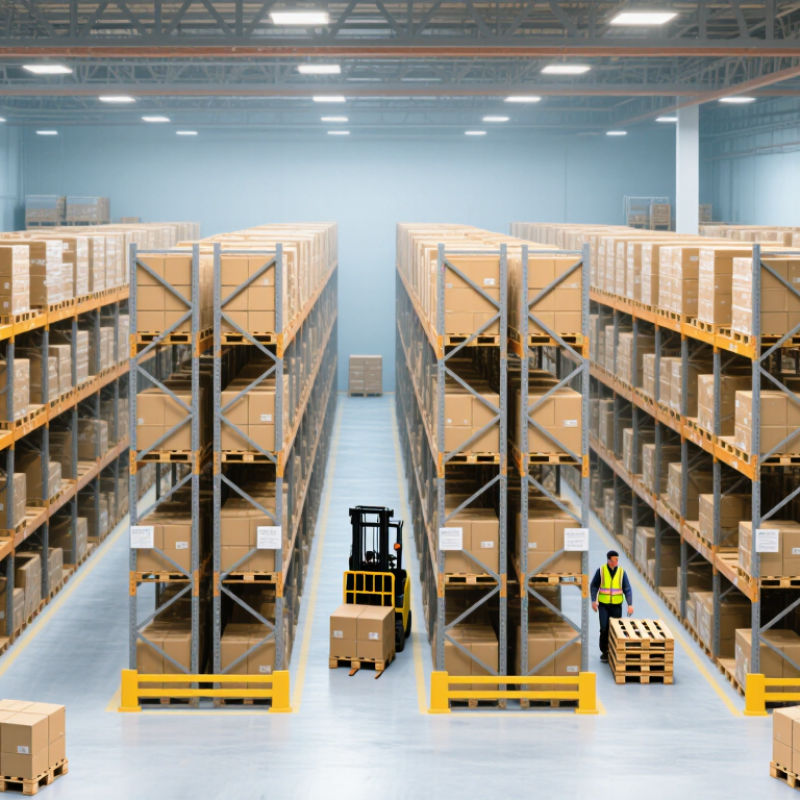
What Is Push-Back Storage?
Push-back storage is a high-density pallet racking system designed for warehouses with limited floor space. It uses inclined rails, rollers, or nested carts inside each storage lane. A forklift places a pallet on the front position and gently pushes it backward. When the front pallet is removed, gravity moves the next pallet forward.
It is simple in action.
This system normally follows a last-in, first-out method. The newest pallet enters the lane first, while the oldest pallet leaves first. Therefore, it suits stable products with predictable turnover, such as building materials, packaged goods, and seasonal inventory. Each lane often stores one product type, reducing picking errors and unnecessary forklift travel. Storage depth commonly varies by design, usually from two to several pallets.
Push-back storage can improve space use, but it is not perfect. It does not naturally support strict first-in, first-out rotation. The layout may look efficient on paper, yet poor product grouping can create daily delays. In practical warehouse inspections, operators should check rail alignment, cart movement, pallet condition, and load limits. A damaged pallet can affect the entire lane. Forklift drivers also need clear training because pushing too quickly may shift the load or damage the rack. Small details matter.
Push-back storage is a high-density pallet system built around deep storage lanes. Each lane contains two or more steel rails, depending on the design. Wheeled carts sit on these rails. Pallets rest on the carts, not directly on the floor. The lane usually has a slight incline toward the loading face. Gravity helps move stored pallets forward. This structure keeps forklifts outside the rack.
During loading, a forklift places a pallet on the front cart and pushes it backward. The cart rolls along the rails and creates space at the lane opening. Additional pallets are placed in front and pushed toward the rear. During unloading, the front pallet leaves the lane first. The carts then move forward automatically. This creates a last-in, first-out flow, which suits products stored in batches.
The frame includes upright columns, horizontal beams, guide rails, carts, and rear stops. Some systems also use wheel locks or protective guards near busy aisles. Rack depth must match pallet size and load weight. A small mismatch can cause uneven movement or rail damage. From practical warehouse checks, operators often focus on forklift clearance but overlook cart condition. That mistake deserves attention. Dust, bent rails, or damaged pallet boards can interrupt smooth movement and create unstable loads. Regular inspections should examine each lane, not only the visible front section.
Push-back storage uses inclined rails or carts inside each lane. A forklift places a pallet at the front, pushing the pallets already stored deeper into the lane. When the front pallet is removed, gravity moves the next pallet forward. Typical systems provide two to six pallet positions per lane and operate on a last-in, first-out basis.
The chart shows how storage capacity increases as the number of pallet positions in one push-back lane increases. Actual capacity depends on rack height, pallet dimensions, load weight, aisle design, and safety clearances.
What Is Push-Back Storage and How Does It Work?
How Pallets Move Through Push-Back Lanes
Push-back storage uses sloped lanes with carts or nested rollers. Pallets enter from the front and move toward the rear. When an operator places a new pallet, it gently pushes the stored pallets backward. Gravity then keeps the row positioned behind the loading pallet. During retrieval, the front pallet leaves the lane first. The remaining pallets roll or slide forward into its place. This creates a compact last-in, first-out storage system.
The movement depends on controlled speed, correct lane capacity, and suitable pallet conditions. Operators should confirm the load weight before placement. A damaged pallet may catch on a roller or shift during travel. That problem is easy to miss from the aisle. Lane dividers, brakes, and rollers also need routine inspection. In a busy warehouse, clear loading instructions reduce sudden impacts and uneven stacking. The system saves floor space, but it requires disciplined handling.
Tips: Keep heavier pallets in approved lower positions. Push each pallet evenly, without forcing it into the lane. Check that the front pallet is fully accessible before retrieval. Leave damaged pallets out of service. Do not mix pallet sizes unless the lane design permits it. A simple inspection log can reveal repeated jams, unusual noise, or slow movement. These signs deserve attention, even when the lane still appears usable. Workers should also verify product rotation needs, because last-in, first-out storage may not suit every inventory type.
| Data Dimension | Typical Specification or Result | How It Affects Pallet Movement |
|---|---|---|
| Storage principle | High-density storage using inclined lanes with wheeled carts or nested rail carriages | Each pallet is stored behind another pallet in the same lane, reducing unused aisle space. |
| Typical lane depth | Commonly 2–6 pallets deep; the final design depends on pallet size, load weight, ceiling height, and handling equipment. | Greater depth increases storage density but requires more pallet travel and usually reduces selectivity. |
| Inventory rotation | Last-In, First-Out (LIFO) | The most recently loaded pallet is normally the first pallet retrieved because loading and retrieval occur from the same aisle. |
| Loading sequence | The forklift places the first pallet on the lowest or deepest available cart position, then pushes earlier pallets farther into the lane. | The incoming pallet moves the stored pallets forward along the inclined lane without requiring the forklift to enter the rack. |
| Stage 1: First pallet loaded | The pallet is placed on the first available cart or carriage at the front of the lane. | The pallet remains at the front until another pallet is added behind it. |
| Stage 2: Additional pallet loaded | The forklift gently pushes the existing pallet or pallet group toward the deeper end of the lane. | The carts roll along the rails and create an open front position for the new pallet. |
| Stage 3: Lane becomes full | Each pallet occupies a designated cart or rail position, subject to the engineered load limit. | The last pallet loaded is positioned closest to the aisle and is normally retrieved first. |
| Retrieval sequence | The forklift removes the front pallet from the aisle side of the lane. | The reduced load allows the remaining carts and pallets to roll forward by gravity or controlled movement. |
| Cart return movement | After a pallet is removed, the next pallet advances toward the front position. | The lane automatically presents the next available pallet, reducing forklift travel inside the storage structure. |
| Forklift access | The forklift operates from the aisle and generally does not drive into the storage lane. | Limited entry reduces the risk of rack impact and can simplify loading and unloading movements. |
| Best inventory profile | Multiple pallets of the same product or product group with relatively low SKU variety per lane | A dedicated lane can hold a product batch while maintaining high storage density. |
| Space utilization | Usually higher than conventional single-deep selective pallet storage because fewer access aisles are required. | More floor area can be devoted to pallet positions, although front clearance and operating aisles are still required. |
| Load compatibility | The pallet, rack, cart, rail, and forklift must be rated for the actual load; capacities are system-specific. | Uneven, unstable, damaged, or incompatible pallets can affect smooth rolling and safe stopping. |
| Primary advantage | High-density storage with relatively quick front-side loading and retrieval | It is effective when storage density is more important than direct access to every individual pallet. |
| Primary limitation | LIFO operation and limited individual pallet selectivity | It may be unsuitable for products requiring strict First-In, First-Out rotation or frequent access to mixed pallets in the same lane. |
Push-back storage is a compact pallet system that uses depth instead of extra aisle space. Each lane holds several pallets on movable carts or nested platforms. A forklift places a new pallet at the front, then gently pushes earlier pallets deeper into the lane. Gravity and the lane’s slight slope help the carts return toward the aisle during retrieval.
The key components make this movement controlled. Inclined steel rails support the carts and create a predictable travel path. Roller beds reduce friction under heavy loads, while cart frames distribute pallet weight across the lane. Front and rear stops limit travel and help prevent accidental roll-through. A sturdy rack frame carries vertical and horizontal forces. Clear load ratings matter. Overloading one level can distort rails or affect cart movement.
Forklift access is equally important. The operator needs enough clearance to enter, lift, and place pallets without striking the frame. Pallet dimensions should match the cart width and rail spacing. In practice, small differences in pallet condition can cause trouble. A broken board may catch on a roller, even when the design is correct. Regular inspections should check rails, stops, wheels, frames, and labels. Some facilities focus heavily on storage density and understate training needs. That is a weakness worth correcting. Push-back storage works best when equipment, load quality, and operator habits are treated as one system.
What Is Push-Back Storage and How Does It Work?
Push-back storage uses nested carts or inclined rails inside each lane. A forklift places a pallet at the front, then pushes it behind earlier pallets. Removing the front pallet lets the stored pallets roll forward by gravity. Operators usually load and retrieve from one aisle, making this a last-in, first-out system.
Its main advantage is density. The 2024 MHI Annual Industry Report reports that 55% of supply-chain professionals expect technology investment to increase over the next two years. Push-back racks can support that strategy without requiring fully automated equipment. They reduce aisle demand compared with many selective-rack layouts and create compact, clearly visible storage lanes. They suit distribution centers handling multiple pallets per product, especially reserve stock with predictable movement.
The limitations deserve more attention. LIFO can leave older stock behind, so it is unsuitable for products with expiry dates or strict batch rotation. Rail friction, damaged pallets, and uneven loading can also interrupt movement. The U.S. Bureau of Labor Statistics recorded 865,000 warehouse and storage workers in 2023, showing how much daily handling still depends on people and equipment. A dense lane may save space but increase forklift interaction and inspection needs. That trade-off is easy to underestimate. In my experience, push-back storage performs best when lane depth, pallet quality, load weight, and replenishment rules are tested together before installation. Otherwise, the promised capacity may exist only on paper.
Push-back storage is a high-density pallet system using sloped lanes, steel rails, and wheeled carts. Pallets rest on carts, not the floor. The design keeps forklifts outside the rack.
A forklift places a pallet on the front cart and pushes it backward. Gravity helps the stored pallets move toward the loading face. Movement should remain controlled.
Push-back storage normally provides last-in, first-out movement. The newest pallet enters at the front. The front pallet leaves first.
The system suits products stored in batches with similar pallet sizes and weights. It may not suit inventory requiring strict first-in, first-out rotation.
Main parts include upright columns, horizontal beams, guide rails, carts, and rear stops. Some systems also include wheel locks and aisle guards.
Confirm the pallet weight, condition, and size. Check that the lane allows those dimensions. Do not force a pallet into a tight or unsuitable lane.
Damaged boards may catch on rollers or shift during travel. The problem may stay hidden from the aisle. Unstable movement can interrupt loading and retrieval.
Inspect rails, carts, rollers, dividers, brakes, and pallet boards regularly. Look for dust, bent rails, unusual noise, jams, and slow movement. Inspect every lane.
Push each pallet evenly and avoid sudden impacts. Keep heavier pallets in approved lower positions. Make sure the front pallet remains fully accessible.
Yes. A simple log can reveal repeated jams or unusual sounds. It is useful, but not perfect. A checklist may still miss hidden cart damage.
Push-Back Storage is a high-density pallet storage method designed to maximize warehouse space while keeping loading and retrieval operations efficient. Instead of requiring a separate aisle for every pallet position, each lane uses inclined rails or carts arranged from the front toward the back. Pallets are placed into the lane from the accessible side, and each new pallet gently pushes the previous one deeper into the structure. When a pallet is removed, the remaining pallets move forward by gravity or controlled rolling action, making the next load available at the front.
A typical Push-Back Storage system includes a strong rack frame, wheeled carts or rollers, inclined support rails, guide components, and safety features that help control pallet movement. Its main benefits include excellent space utilization, reduced travel distance, and convenient access to multiple pallets within a lane. However, it generally follows a last-in, first-out sequence, requires compatible pallet loads, and may involve higher installation and maintenance costs. It is best suited for warehouses storing multiple pallets of the same product with moderate turnover.

Shibang Steel