How to Choose Steel Containers for Global Shipping?

Time:2026-10-10 Author:Mason
0%

Choosing Steel Containers for global shipping is not simply a matter of comparing prices. The right unit must survive lifting, stacking, sea air, road vibration, and changing climates. A container that looks strong in a warehouse may show weak door seals after months near saltwater. Small details matter.

Shipping historian and containerization expert Marc Levinson wrote, “The container made possible the globalization of trade.” His observation explains why container selection deserves practical attention. Steel Containers support a worldwide transport system, but they are not automatically suitable for every cargo or route. Buyers should examine dimensions, maximum payload, internal volume, corner posts, door condition, flooring, and corrosion protection. Corten steel can resist weathering, yet it still needs inspection. Rust around the roof seam is not a minor cosmetic issue.

Route conditions change the decision. A short inland shipment may need different protection than a long ocean journey through humid ports. Temperature-sensitive goods also require careful planning, even when the container itself is sound. Check certification plates, inspection records, and load limits before purchase or booking. Ask how the unit was maintained.

The lowest quotation can mislead. A damaged door may delay loading. An uneven floor may affect cargo stability. These risks are easy to underestimate.

Experience helps, but it does not replace documentation. Compare suppliers, request clear specifications, and inspect photographs closely. If possible, arrange an independent pre-shipment inspection. No choice is perfect. Still, a disciplined review can reduce damage, delays, and unexpected costs across the shipping journey.
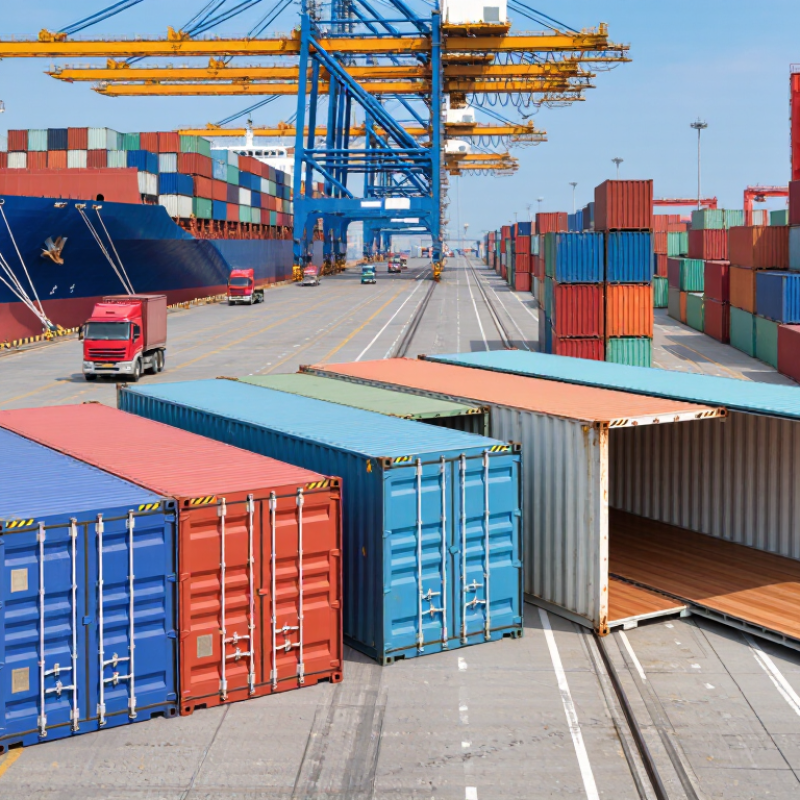
How to Choose Steel Containers for Global Shipping?

Shipping Requirements and Steel Container Types

How to Choose Steel Containers for Global Shipping?

Shipping requirements should guide the container choice, not appearance or price alone. UNCTAD’s Review of Maritime Transport 2023 states that over 80% of global merchandise trade by volume moves by sea. That scale makes small equipment decisions important.

Standard dry containers suit boxed, palletized, and non-temperature-sensitive cargo. High-cube units add internal height, but they can increase loading risks when goods are stacked without proper restraint.

Check the container’s ISO markings, CSC safety plate, payload, and inspection history. ISO 668 supports consistent external dimensions, while the CSC Convention sets basic safety requirements for international movement.

Reefer containers require stable power, airflow, and verified temperature settings. Open-top units help with tall machinery.

Flat racks suit oversized loads, but cargo securing becomes critical. Tank containers require specialized approval and careful compatibility checks.

Cargo weight matters more than volume.

UNCTAD also reported that global container port performance remains vulnerable to congestion and schedule disruption. Therefore, inspect door seals, flooring, corner posts, and visible corrosion before dispatch.

A clean steel surface does not prove structural strength. A common mistake is choosing a high-cube container simply because it offers more space. The extra room may encourage unstable stacking.

In practice, the best selection balances cargo dimensions, loading method, route conditions, inspection records, and the carrier’s acceptance rules. Some assumptions will be wrong. Recheck them.

Container Size, Capacity, and Payload Considerations

Choosing steel containers for global shipping starts with the cargo, not the container catalog. Measure length, width, height, and the highest loading point. Record each dimension in centimeters, including pallets and protective frames. A small error can force repacking at the terminal. That is expensive. Standard dry containers often suit boxed goods, while high-cube units provide extra vertical clearance. Yet more internal space does not automatically mean more usable capacity. Doors, corner posts, and lashing points reduce practical room.

Capacity has two limits: volume and payload. Calculate cubic volume, then compare it with the container’s rated maximum gross mass. Subtract the empty container tare weight to find the allowable cargo payload. For example, a 28,000-kilogram gross limit and a 3,800-kilogram tare allow 24,200 kilograms of cargo, subject to route rules. Verify these figures on current equipment documents. Containers vary by fleet and age. I have seen teams plan by floor area alone, then discover dense machinery reaches the weight limit with unused space above it. That plan looked efficient. It was not.

Distribute weight evenly across the floor, keeping heavy items low and near the center. Use certified restraints, edge protection, and a loading plan that matches forklift access. Check axle limits, port handling restrictions, and destination requirements before sealing the doors. A payload calculation can be correct but operationally wrong. Recheck the numbers. Leave realistic clearance for ventilation, inspection, and safe unloading. When measurements are uncertain, build a conservative allowance rather than trusting a perfect spreadsheet.

Material Quality, Durability, and Weather Protection

For global shipping, steel container selection begins with material quality, not paint color. Choose structural steel with documented grade, consistent thickness, and traceable inspection records. Thicker panels may resist dents, but excessive weight can reduce payload efficiency. The practical balance matters. Check corner posts, roof rails, floor cross-members, and welds for distortion. A clean weld is not enough; it should be continuous, even, and free from visible cracking. Ask for test reports and maintenance history when the unit is reused.

Durability depends on how the container handles repeated lifting, stacking, vibration, and sudden temperature changes. Weather protection starts with intact door gaskets and properly aligned locking bars. Inspect the roof for shallow pools after rain. Water often enters through small seams. A sound coating system should resist salt air, abrasion, and ultraviolet exposure. However, no coating lasts forever. Scratches around forklift contact points need prompt repair, or corrosion may spread beneath the surface. I would also check the floor for moisture damage, odors, and softened boards. Small defects become expensive during long routes.

For humid or coastal routes, request corrosion protection suited to the expected environment, not a generic promise. Desiccant bags can reduce condensation, but they cannot fix leaks. Ventilation helps, although excessive airflow may carry salty moisture inside. This is where selection becomes less certain. Climate data, cargo sensitivity, and voyage duration should guide the decision. Keep dated inspection photos and repair records. They make quality claims easier to verify, while revealing weaknesses that a quick visual check may miss.

How to Choose Steel Containers for Global Shipping? - Material Quality, Durability, and Weather Protection
Selection Factor Recommended Specification Practical Benchmark Why It Matters for Global Shipping What to Verify
Main Structural Steel Weather-resistant or high-strength low-alloy steel for corner posts, rails, cross members, and side panels. Steel grade and thickness should be documented by the manufacturer; structural components must meet the applicable ISO container design requirements. The frame carries lifting, stacking, racking, and transport loads. Suitable steel helps reduce permanent deformation and fatigue damage. Material certificates, fabrication drawings, weld inspection records, and compliance documentation.
International Compliance A freight container designed and tested under ISO container requirements and approved for international transport. Conformity with ISO 668 and ISO 1496-1, plus a valid CSC safety approval plate where required for ocean transport. Standardized dimensions and safety testing support compatibility with ships, rail wagons, chassis, cranes, and handling equipment. CSC plate, inspection date, identification number, maximum gross mass, and authorized inspection records.
Corner Posts and Fittings Reinforced corner posts and accurately manufactured corner castings suitable for lifting and stacking. Corner fittings should be dimensionally compatible with standard container handling equipment and free from cracks or significant distortion. Most lifting and stacking forces are transferred through the corner structure. Damage in these areas can create serious safety risks. Visual inspection, dimensional checks, weld quality, and evidence of load or design testing.
Panel and Floor Strength Corrugated steel side and end panels with a heavy-duty, moisture-resistant floor system. Floor capacity must be selected for the cargo; common container floors use treated timber or engineered panels over steel cross members. Corrugated panels improve stiffness, while the floor must resist concentrated wheel loads, pallet loads, abrasion, and repeated forklift handling. Rated floor load, cross-member spacing, floor material treatment, fastener condition, and repair history.
Corrosion Protection A multi-layer coating system, normally including surface preparation, primer, intermediate protection, and a durable topcoat. Coating thickness should be specified by the project requirements and measured at representative areas; damaged coating should be repaired before service. Salt spray, humidity, condensation, and standing water can cause corrosion, especially at welds, joints, underframes, and scratched areas. Coating system data sheet, surface-preparation method, dry-film-thickness readings, and holiday or adhesion test results when applicable.
Weatherproofing Continuous door-gasket contact, sound door hardware, sealed roof joints, and properly formed external seams. The interior should remain dry during a documented water-ingress test; doors should close evenly without excessive force or visible gaps. Rain, spray, snow, and condensation can damage cargo, packaging, labels, and moisture-sensitive equipment during long voyages. Water test, gasket condition, door alignment, locking-bar operation, roof inspection, and interior evidence of leakage.
Roof and Drainage A sound roof with sufficient slope or formed profile to prevent persistent water accumulation, plus clear drainage paths. No punctures, open seams, severe dents, blocked drains, or areas where water can remain trapped after rainfall. Standing water accelerates coating failure and corrosion, while roof leaks are a common source of cargo damage. Roof walk-around, underside inspection, hose test, drain inspection, and checking for daylight through seams or holes.
Door and Locking System Two-leaf cargo doors with corrosion-resistant hinges, locking bars, handles, retainers, and replaceable gaskets. Doors should open and close smoothly, maintain compression around the gasket, and lock securely at all designated points. A reliable door system protects against water ingress, unauthorized access, vibration, and cargo movement during handling. Operational test, gasket compression, hinge wear, locking-bar alignment, handle condition, and seal compatibility.
Climate and Route Exposure Select coating, ventilation, insulation, and corrosion controls according to the route, cargo, and expected climate. For marine and coastal routes, prioritize salt-resistant coatings and frequent inspection of the underframe, roof, doors, and weld areas. Tropical humidity, freezing temperatures, desert dust, ultraviolet exposure, and marine salt create different protection requirements. Route risk assessment, cargo moisture sensitivity, environmental exposure category, and maintenance plan.
Load and Stacking Capacity Choose a container whose permitted gross mass and payload match the cargo, packing method, and transport regulations. Use the maximum gross mass shown on the CSC plate; never exceed the container, road, rail, port, or vessel limitations. Overloading can damage the floor and frame, increase handling risk, and create regulatory or insurance problems. CSC plate, tare mass, maximum gross mass, payload calculation, cargo securing plan, and local transport limits.
Inspection and Maintenance Use a documented inspection program covering structure, corrosion, doors, seals, floor, fittings, and markings. Inspect before loading and after significant impact, water ingress, stacking damage, or extended exposure to corrosive environments. Early detection of corrosion, cracks, distortion, and seal failure reduces cargo claims and prevents minor defects from becoming structural problems. Inspection checklist, repair records, photographs, next examination date, and evidence that defects were properly repaired.

Compliance, Security, and International Shipping Standards

How to Choose Steel Containers for Global Shipping?

Compliance begins with the container’s identity plate. It should show a valid CSC safety approval, maximum gross mass, and inspection history. The International Convention for Safe Containers requires periodic examinations, usually within 30 months. Check these records before loading. A missing or damaged plate is a serious warning.

ISO 668 dimensions support compatibility with ships, rail wagons, and terminal equipment. ISO 1496 testing also covers strength, doors, floors, and weather resistance. Look closely at corner castings, door rods, welds, and roof seams. Small rust bubbles can hide deeper corrosion. A dry interior matters as much as strong steel. It protects cargo from condensation and salt air.

Security requires more than a sturdy box. Use tamper-evident, high-security seals that follow ISO 17712, and record seal numbers during every handover. Submit verified gross mass under SOLAS before loading. The World Shipping Council reported 576 containers lost at sea in 2023, among roughly 250 million transported. The percentage is tiny, but one unsecured load can still cause major disruption. UNCTAD reports that over 80% of global merchandise trade by volume moves by sea. That scale makes consistent inspection essential. In practice, selection is not always perfect. A newer container may still have poor door alignment. Check it physically, not only on paper.

How to Choose Steel Containers for Global Shipping?

Compliance, security, and international shipping standards should be checked before selecting a steel container. The chart compares the maximum gross mass specified for common ISO freight-container configurations under ISO 668.

Selection guidance: Confirm that the container has a valid CSC safety approval plate, follows ISO 668 dimensional requirements, uses an ISO 6346 identification code, and can be secured with compliant customs seals. Actual payload must be calculated by subtracting the container tare mass from its maximum gross mass.

Cost, Availability, and Supplier Evaluation

Choosing steel containers for global shipping requires more than comparing purchase prices. In procurement practice, the lowest quote often hides inland transport, coating upgrades, inspection fees, and repair costs. UNCTAD’s Review of Maritime Transport 2024 states that more than 80% of world trade by volume moves by sea. Availability therefore matters. A container ready near the loading port may cost less than a cheaper unit requiring weeks of repositioning.

Ask suppliers for a landed-cost quotation. Include steel grade, wall thickness, floor material, corrosion protection, corner casting standards, and delivery terms. Check production capacity against your shipping schedule. Request recent inspection records, material certificates, dimensional reports, and photographs of welds and door seals. Small details matter. A poorly aligned door can delay loading and increase handling costs.

Supplier evaluation should also consider logistics reliability. The World Bank’s Logistics Performance Index 2023 assessed 139 economies across customs, infrastructure, and shipment timeliness. These factors affect delivery risk, not just freight rates. Review a supplier’s export experience, replacement policy, traceability system, and independent inspection process. ISO 668 dimensions and applicable container safety requirements should be verified before payment. A sample unit is useful, but one sample cannot represent every production batch. That limitation deserves attention. Some buyers still accept vague warranties to save money. That decision can become expensive after salt air, rough handling, and repeated port transfers.

FAQS

How should I choose a steel container for global shipping?

Start with the cargo, not appearance or price. Check dimensions, weight, loading method, route conditions, and acceptance rules. This choice can be wrong. Recheck it.

When is a standard dry container suitable?

It suits boxed, palletized, and non-temperature-sensitive goods. Keep heavy items low and centered. Leave clearance for inspection and safe unloading.

What advantage does a high-cube container provide?

It offers extra internal height for taller cargo. More space can encourage unstable stacking. Use restraints and confirm the highest loading point.

How do I calculate the allowable cargo payload?

Subtract the container tare weight from its maximum gross mass. For example, 28,000 kilograms minus 3,800 kilograms allows 24,200 kilograms. Verify current equipment documents.

What measurements should I record before loading?

Measure length, width, height, and the highest loading point. Include pallets, protective frames, and packaging. Use centimeters. Measure twice.

Which container type suits oversized or tall machinery?

Open-top containers suit tall machinery that cannot pass through standard doors. Flat racks suit oversized loads. Cargo securing becomes critical.

What should I inspect before dispatch?

Check door seals, flooring, corner posts, visible corrosion, markings, safety plates, and inspection history. A clean surface proves little. Look beneath the paint.

How can I prevent weight and loading problems?

Distribute weight evenly across the floor. Keep dense machinery low and near the center. Check axle limits and port restrictions. Do not guess.

What extra requirements apply to temperature-controlled or tank containers?

Temperature-controlled units need stable power, airflow, and verified settings. Tank containers require specialized approval and compatibility checks. Confirm destination requirements before sealing the doors.

Conclusion

Choosing the right Steel Containers for global shipping requires a careful evaluation of cargo requirements, transport conditions, and destination regulations. Start by selecting a container type that matches the goods, whether they need standard enclosed protection, specialized ventilation, reinforced construction, or easier loading access. Size, internal capacity, maximum payload, and weight distribution should be reviewed together to prevent wasted space, handling difficulties, or transport limitations.

Material quality is equally important. Strong steel, reliable doors, effective seals, corrosion resistance, and weather protection help safeguard cargo during long journeys and changing climates. Buyers should also confirm that the containers meet applicable international shipping and safety standards, support secure locking, and have clear inspection documentation. Finally, compare total costs, including purchase, delivery, maintenance, and future usability. Supplier evaluation should focus on manufacturing consistency, product availability, customization options, documentation, and after-sales support. A balanced decision will improve cargo protection, operational efficiency, and shipping reliability.

Mason

Mason

Mason is a seasoned marketing professional with a deep expertise in the company's offerings and a passion for driving brand awareness. With a strong background in digital marketing strategies, he has an innate ability to connect with diverse audiences and effectively communicate product benefits.......