What Is the Best Drive-in Storage Racking in 2026?

Time:2026-09-25 Author:Aria
0%

Warehouse space is expensive, and every aisle consumes room that could hold inventory. That pressure makes Drive-in Storage attractive in 2026. It lets forklifts enter deep rack lanes, reducing the number of access aisles and increasing storage density. But density alone does not make a system the best choice.

MHI’s 2024 Annual Industry Report found that 55% of supply chain leaders planned to increase investment in technology and innovation. That figure reflects wider pressure to improve warehouse performance, not proof that one rack design suits every operation. Drive-in racks generally work best for large quantities of similar products, especially when pallets move in last-in, first-out order. A forklift, a deep lane, and a row of matching pallets: the layout can be efficient. It can also slow picking when many product lines need frequent, direct access. That matters.

The right decision depends on more than pallet capacity. Buyers should assess load dimensions, forklift type, lane depth, inventory turnover, floor condition, and sprinkler design. They should also examine rack protection, inspection routines, and how damaged pallets will be handled. These details are easy to underestimate. A dense layout may look excellent on a drawing, yet create bottlenecks during a busy shift. This guide compares the main Drive-in Storage options for 2026 and explains where each system fits, what trade-offs to expect, and which questions to raise before installation. There is no universal winner. The best choice is the one that fits the actual inventory and operating pattern.
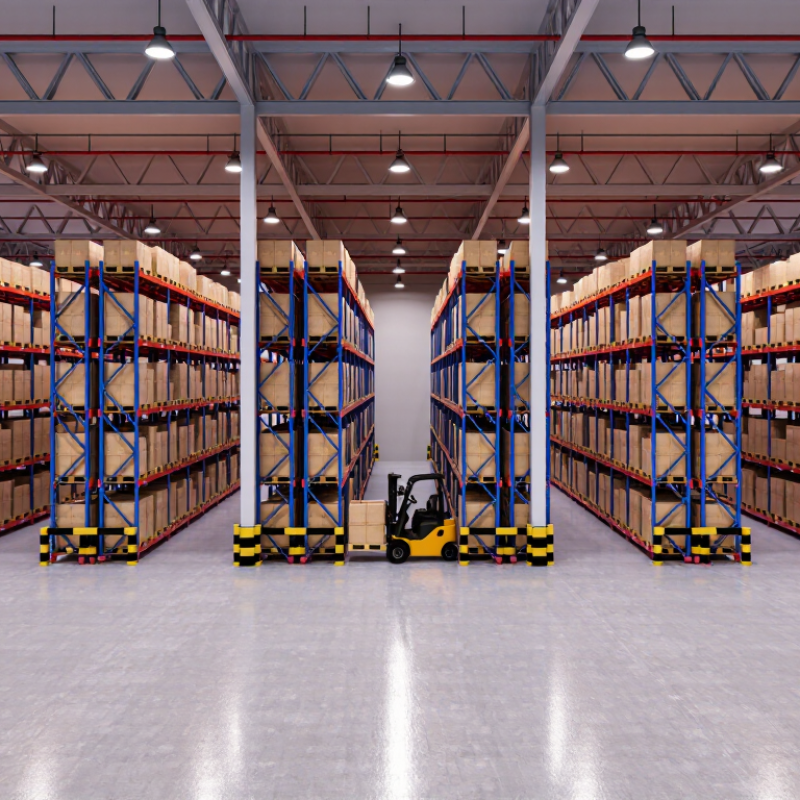
What Is the Best Drive-in Storage Racking in 2026?

Drive-In Storage Racking: Design and Core Components

Drive-in storage racking uses deep lanes to store pallets with few access aisles. Its design suits stable, uniform loads that move in batches. Forklifts enter each lane and place pallets on support rails fixed to the upright frames. The rails carry the pallet edges, so their position and strength must match the load and pallet dimensions. Small mismatches matter.

Core components include upright frames, horizontal bracing, pallet support rails, guide rails, and entry protectors. Frames transfer loads to the floor; bracing helps keep them square under operating forces. Guide rails help forklifts stay centered, while protectors reduce damage at lane entrances. They cannot prevent every collision. Clearances should be checked against the actual truck, mast, pallet overhang, and turning approach, not just a drawing.

A sound layout also considers floor condition, slab capacity, sprinkler access, and safe operating procedures. A qualified rack designer should verify load data and anchoring requirements before installation. For single-entry lanes, stock is generally managed on a last-in, first-out basis; through-lanes can allow access from both ends. That distinction affects daily picking, not only storage density. One practical weakness is that a damaged rail can be hard to spot deep inside a lane. Regular inspections and clear damage reporting help catch problems before they grow.

How Pallets Move Through Drive-In Rack Lanes

What Is the Best Drive-in Storage Racking in 2026?

In drive-in racking, a forklift enters the lane to place or retrieve pallets. Pallets rest on rails along both sides, so the operator must keep the load level and centered. In a typical drive-in lane, the deepest pallet goes in first and comes out last: a last-in, first-out sequence. Drive-through systems allow access from both ends and can support first-in, first-out handling. Lane depth, pallet condition, and forklift turning clearance all affect safe movement. A tidy layout drawing can still miss a real issue: damaged pallets may snag on rails.

OSHA’s Powered Industrial Trucks safety guidance cites estimates of about 85 forklift-related fatalities and 34,900 serious injuries each year in the United States. These figures are not specific to drive-in racks, but they underscore why lane visibility, trained operators, and clear travel paths matter. Before loading, operators should check rail condition and confirm the pallet fits the lane. They should enter squarely, travel slowly, and avoid turning beneath a raised load.

Tips: Mark each lane’s loading direction clearly. Keep the first pallet straight and fully supported. Inspect pallets before storage; one cracked board can disrupt retrieval. And be honest about the trade-off: deep lanes save aisle space, but make access to individual pallets less flexible.

How Pallets Move Through a Drive-In Rack Lane

This illustrative example follows a four-position lane from empty to full and back to empty. In a typical drive-in system, a forklift enters the lane to place or retrieve pallets; loading and retrieval generally follow a last-in, first-out sequence.

Benefits and Limitations of Drive-In Storage

Drive-in racking can turn wide aisle space into dense pallet lanes. Forklifts enter the lanes to place or retrieve pallets, so fewer aisles may be needed. This can suit operations storing large quantities of similar goods, such as identical cartons on standard pallets. Space is gained. Access is not. In a deep lane, the front pallet can block the one behind it. Drive-in systems generally work best when goods move in last-in, first-out order and frequent access to every pallet is unnecessary.

The trade-off deserves careful planning. A damaged or uneven pallet may catch on rails, while tight clearances leave little room for forklift error. Operators need training to enter lanes slowly and position loads accurately. Regular checks should look for bent uprights, loose connections, and damaged guides. Product rotation can also become awkward when batches or expiry dates differ. That limitation is easy to underestimate. Before choosing this system, compare lane depth with inventory turnover, pallet consistency, and retrieval needs. A high-density layout is useful only when daily handling remains safe and predictable.

How to Compare Drive-In Racking Options in 2026

Drive-in racking suits warehouses that store many pallets of the same product, but density alone is a poor comparison metric. Check how many pallet positions each option creates after accounting for aisle width, lane depth, and required clearances. Deep lanes can reduce travel and aisle space. They can also make the rear pallets harder to reach.

Compare inventory rotation before choosing a layout. Drive-in lanes generally work best when pallets can be retrieved in last-in, first-out order. If older stock must leave first, evaluate drive-through access or another storage design. Ask suppliers to model your actual SKU mix, daily pallet movements, and forklift dimensions—not a perfect sample layout. Small details matter.

The 2024 MHI Annual Industry Report found that 55% of respondents planned to increase supply-chain technology investment over the following two years, while 88% viewed such technology as a competitive advantage. Those figures are not drive-in-rack performance guarantees. They do suggest measuring how storage choices affect warehouse operations. Compare usable pallet positions, retrieval time, damage risk, and installation cost. Then verify load ratings, floor capacity, and seismic requirements with a qualified rack designer. I would still question any proposal that promises high density without showing how workers safely reach every lane.

Selecting Drive-In Racking for a Warehouse’s Needs

Choosing drive-in racking starts with the warehouse’s inventory, not a headline capacity figure. This system suits large quantities of similar pallets with relatively few stock-keeping units. Forklifts enter storage lanes, so several pallets can sit behind one another. The trade-off is access: many layouts operate on a last-in, first-out basis. That matters.

Check pallet dimensions, weights, and condition before setting lane depth. A mixed pallet fleet can create awkward gaps or unsafe clearances. Measure the forklift’s turning radius and mast height, then confirm the aisle and entry dimensions with the equipment supplier. Small differences matter. Verify floor capacity and rack load ratings with qualified professionals; concrete that looks sound may still need assessment.

Think about daily work, too. Deep lanes reduce travel and free up floor space, but retrieving one pallet may require moving others. That can add handling time and damage risk. For seasonal goods, that may be acceptable; for fast-moving products, it may not be. Consider lane assignment, replenishment patterns, rack protection, and routine inspection access. A simple layout drawing helps, though it can miss real traffic habits. Watch a shift in operation before committing. One week may not tell the whole story.

What Is the Best Drive-in Storage Racking in 2026? — Selecting Drive-In Racking for a Warehouse’s Needs

Use this planning comparison to match a drive-in or drive-through configuration to inventory, handling equipment, and operating requirements.
Warehouse Need Recommended Configuration Typical Planning Range Inventory and Rotation Fit Key Selection Checks
Maximum pallet density Single-entry drive-in block with deep lanes Often planned with approximately 4–8 pallet positions deep per lane; actual depth depends on the building, pallet, and handling method. Best for a small number of SKUs with many pallets per SKU. Operates mainly on a last-in, first-out (LIFO) basis. Check lane depth, forklift reach, load stability, pallet condition, and how replenishment will be sequenced.
Higher stock rotation Drive-through lanes with access from both ends Lane depth and working space should be sized to the pallet load and the selected forklift; no single depth suits every site. Can support first-in, first-out (FIFO) flow when loading and picking are controlled from opposite ends. Provide access and operating space at both faces. Confirm that the warehouse process prevents loading and picking conflicts.
Several SKUs with moderate pallet quantities Shallower lanes with more separate lanes Common planning approach: fewer pallet positions deep than a maximum-density block, with lane count set by SKU count and stock profile. Improves access by SKU compared with very deep lanes, while retaining more density than many selective-rack layouts. Estimate average and peak pallets per SKU; avoid lanes so deep that slow-moving stock blocks access to other pallets.
Mixed or frequently changing inventory Drive-in racking for bulk SKUs, with selective storage for the remainder Allocate drive-in lanes only to compatible, predictable bulk stock; reserve accessible locations for smaller or variable lots. Useful when some products have high pallet quantities but many other products require direct access. Review SKU counts, seasonal peaks, expiry rules, picking frequency, and replenishment patterns before assigning storage zones.
Cold or temperature-controlled storage Compact drive-in or drive-through layout designed for the cold-room envelope Rack height, lane depth, clearances, and aisle layout must be measured against the actual room and equipment. High density can reduce the space needed to store large quantities of similar products. Check floor flatness, condensation and corrosion protection, sprinkler and refrigeration clearances, and forklift suitability.
Standard pallet handling Rack designed around the warehouse’s actual pallet and load dimensions Record pallet width, depth, height, loaded weight, overhang, and load stability for every relevant load type. Suitable only when pallets can be placed consistently and remain stable on the support rails. Do not use a generic capacity assumption. A qualified designer must calculate beam, upright, rail, and frame loads for the proposed layout.
Counterbalance forklift operation Lane and aisle arrangement verified with the specific truck Conventional counterbalance trucks commonly need wider operating aisles than reach trucks; required width varies by truck and load. Can work well where the warehouse already uses compatible trucks and has sufficient maneuvering space. Use the truck manufacturer’s turning and stacking data. Verify mast height, overhead clearance, load center, and entry protection.
Reach-truck or other specialized handling Drive-in layout engineered around the selected truck and lane-entry method Aisle width and clearances must come from equipment specifications and a site layout, not a general rule of thumb. May help reduce aisle space where the truck is approved for the operating conditions and rack geometry. Confirm truck suitability for entering lanes, visibility, lifting height, mast clearance, and safe travel on the floor.
High throughput or frequent pallet access Compare drive-in with selective, push-back, or pallet-flow storage Compare total storage locations, access faces, replenishment labor, and expected pallet moves per hour. Drive-in is generally less selective; another system may suit operations requiring faster access or stricter FIFO control. Model daily picks and replenishments, not just storage density. Include congestion, damaged pallets, and inventory-control rules.
Best overall choice for a warehouse Configuration selected from a site-specific rack and operations design There is no universal “best” lane depth, aisle width, or load capacity for every warehouse. Drive-in is most compelling when many pallets share each SKU and direct access to every pallet is not required. Validate layout, floor capacity, seismic and fire requirements, sprinkler coverage, operating procedures, and applicable local codes.

Planning note: Ranges above are preliminary guidance, not engineering specifications. Final design and rated capacities depend on the pallet and load, rack geometry, floor and building conditions, equipment, local regulations, and a qualified rack designer’s calculations.

FAQS

What is drive-in storage racking?

It stores pallets in deep lanes with few access aisles. Forklifts enter the lanes to place or retrieve loads. Space is gained. Access becomes less flexible.

How do pallets move through a drive-in lane?

The deepest pallet usually goes in first and comes out last. This is last-in, first-out handling. Operators should enter squarely and move slowly.

Can drive-in racking support first-in, first-out handling?

A through-lane can allow forklift access from both ends. This may support first-in, first-out movement. The layout and daily picking process both matter.

What components make up a drive-in rack?

Common parts include upright frames, bracing, support rails, guide rails, and entry protectors. Rails support pallet edges. Protectors reduce entrance damage, but cannot prevent every collision.

What should be checked before installation?

Verify load data, pallet dimensions, floor condition, slab capacity, and anchoring needs. Check clearances using the actual forklift, mast, and turning approach. Drawings can miss details.

Which goods suit drive-in racking?

It often suits large quantities of similar goods on consistent pallets. It works best when batches move together and every pallet does not need frequent access.

What are the main drawbacks?

A front pallet can block access to pallets behind it. Different batches or expiry dates may complicate rotation. Deep lanes save aisle space, but not retrieval time.

How can operators reduce lane problems?

Mark each lane’s loading direction. Check pallets for cracked boards and confirm they fit before storage. Keep loads level and centered. Small errors can snag.

What should regular inspections look for?

Check for bent uprights, loose connections, and damaged rails or guides. Damage deep inside a lane can be hard to spot. Reporting it promptly matters.

Conclusion

Drive-in Storage racking is a high-density system that stores pallets several positions deep within shared lanes, supported by upright frames, rails, and structural bracing. Forklifts enter the lanes to place or retrieve pallets, so the layout and operating method should match the equipment, pallet dimensions, load requirements, and available aisle space. In a typical arrangement, pallets are stored and accessed from the same end, making lane planning and clear operating procedures important for safe, consistent handling.

The best option in 2026 depends on a warehouse’s inventory flow rather than on density alone. Drive-in racking can make efficient use of floor space and suit operations that store larger quantities of similar products, but it offers less selectivity and may require careful management of stock rotation. When comparing systems, consider capacity, structural design, lane depth, forklift compatibility, installation needs, and future flexibility. A well-matched design balances storage density with safe access, practical throughput, and the warehouse’s day-to-day requirements.

Aria

Aria

Aria is a dedicated marketing professional with a deep passion for innovative strategies and a keen understanding of our company's product offerings. With a wealth of experience in the industry, Aria excels at crafting engaging content that highlights the unique features and benefits of our......